
Many parents are careful when it comes to their children’s education.
And honestly, they should be.
Every few years, there is a new learning method, a new class, a new program, a new promise, and a new “this will change your child’s life” campaign. So when parents hear about abacus learning, it is normal for them to ask questions.
Does it really work?
Can moving beads actually help a child think better?
Is this just another extra lesson with fancy packaging?
Will my child truly benefit from it?
These are fair questions.
At Sobay Abacus Academy, we do not expect parents to believe blindly. In fact, we welcome parents who ask questions, because good education should make sense.
So let us talk honestly about abacus learning, what it does, what it does not do, and why it can be a powerful support for children when taught properly.
Abacus Learning Is Not Magic
Let us start here.
Abacus learning is not magic.
It will not turn every child into a genius overnight. It will not replace school. It will not remove the need for practice, patience, and encouragement.
But it can help children develop important thinking habits.
That is the real value.
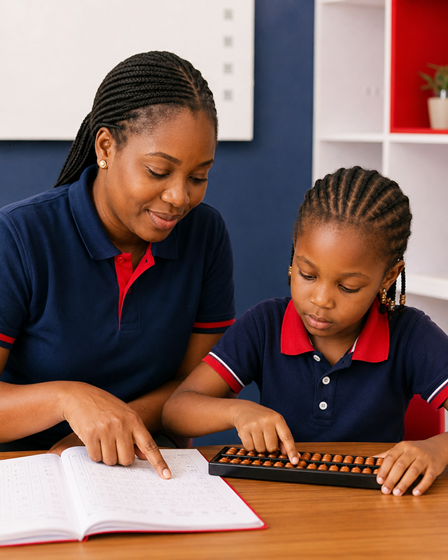
Abacus training gives children a practical way to understand numbers. Instead of only seeing figures on paper, children use beads to represent numbers, move them, group them, and calculate with them.
This makes mathematics more visual and more physical.
For many children, that is where the breakthrough begins.
Some children struggle with mathematics because numbers feel too abstract. They see “7 + 8” on paper, but they do not fully understand what is happening. The abacus gives them something to see and touch, so the calculation becomes clearer.
When a child begins to understand numbers better, confidence can start to grow.
Why Some Children Fear Mathematics
Many children do not hate maths because they are lazy.
They fear maths because they have experienced confusion, pressure, embarrassment, or repeated failure.
A child who gets answers wrong again and again may begin to believe, “I am not good at maths.”
Once that belief enters a child’s mind, it can affect everything.
They
may stop trying.
They may avoid homework.
They may guess answers.
They may become anxious during tests.
They may depend too much on others.
This is why parents must pay attention not only to grades, but to the child’s relationship with learning.
A child who is afraid of numbers needs more than correction. The child needs a better method, patience, and small wins that rebuild confidence.
Abacus learning can help create those small wins.
How the Abacus Helps Children See Numbers
One of the biggest strengths of the abacus is that it makes numbers visible.
Children learn that numbers are not just marks in a book. Numbers have value, position, movement, and relationship.
When a child moves beads, they begin to understand place value, addition, subtraction, grouping, and calculation patterns in a practical way.
This is important because many children memorize steps without understanding the meaning behind them.
They may know the answer today and forget it tomorrow.
But when children understand how numbers work, they are more likely to remember and apply what they learn.
That is one reason abacus training can be useful.
It builds understanding first.
But How Does It Help the Brain?
When people say abacus learning “boosts the brain,” it can sound exaggerated.
A better way to say it is this:
Abacus learning trains important mental skills that children need for learning.
During abacus practice, a child must listen, watch, remember, move the correct beads, follow instructions, check answers, and stay focused.
That is a lot of mental activity.
The child is not just sitting passively. The child is thinking, observing, calculating, and correcting.
With regular practice, this can support:
· Better focus
· Stronger memory
· Faster recall
· Improved visual thinking
· Better number confidence
· More patience
· Stronger problem-solving habits
· Better listening and attention
These are the skills people are really talking about when they say abacus helps the brain.
It is not about magic brain power. It is about structured mental exercise.
Just as physical exercise strengthens the body, good mental practice can strengthen learning habits.
The Move From Physical Abacus to Mental Maths
At the beginning, children use the physical abacus.
They
touch the beads.
They count.
They move.
They correct.
They practice.
But over time, something interesting begins to happen.
The child starts to imagine the abacus mentally.
Instead of always needing the physical tool, the child begins to picture the bead movements in the mind. This is the foundation of mental maths.
This transition is powerful because the child is learning to visualize calculations.
Visualization is a strong learning skill.
When children can picture steps in their mind, they are not only memorizing. They are processing.
That is why abacus-trained children often become more confident with mental calculation. They have practiced seeing the calculation before solving it.
Why Focus Improves With Abacus Practice
Many parents complain that their children cannot concentrate.
They
start homework and get distracted.
They listen for two minutes and drift away.
They rush through questions.
They make careless mistakes.
Abacus practice helps because it requires attention.
A child must follow the instructor’s pace. The child must move the correct beads. The child must track the numbers. The child must avoid careless movement.
If the child loses focus, the answer may be wrong.
Over time, this teaches the child to slow down, pay attention, and complete tasks carefully.
This does not mean the child will suddenly become perfectly focused in every area of life. Children are still children.
But with regular practice, they can build better attention habits.
And better attention can affect schoolwork, homework, reading, tests, and classroom learning.
Why Memory Improves With Repetition
Abacus learning involves repetition, and repetition is one of the ways children learn deeply.
Children
repeat bead movements.
They repeat number combinations.
They repeat calculation patterns.
They repeat mental images.
At first, the process may feel slow. But as the child continues, the brain becomes more familiar with the patterns.
That familiarity can support memory.
A child who practices regularly begins to remember steps more easily. They become quicker with number relationships. They start recognizing patterns faster.
This is one of the reasons consistency matters.
A child who attends once in a while may not experience the full benefit. But a child who practices steadily has a better chance of building lasting skill.
Why Confidence Is the Biggest Win
For many children, the biggest benefit of abacus learning is not speed.
It is confidence.
Speed is beautiful. Accuracy is important. But confidence changes everything.
When a child who used to fear maths begins to solve problems independently, something shifts.
The child begins to believe, “Maybe I can do this.”
That belief is powerful.
A confident child is more willing to try. A confident child is less afraid of mistakes. A confident child participates more. A confident child does not give up as quickly.
At Sobay Abacus Academy, this is one of our biggest goals.
We want children to stop seeing mathematics as an enemy.
We want them to see numbers as something they can understand, practice, and master step by step.
What Parents Should Not Expect
Parents should also be realistic.
Abacus learning is not an instant fix.
If a child has struggled with maths for years, one or two classes will not solve everything. If a child does not practice, progress may be slow. If parents pressure the child too much, the child may become discouraged.
Good learning takes time.
Parents should expect gradual improvement, not overnight miracles.
Some children may first improve in attention. Some may first improve in confidence. Some may first improve in speed. Some may take longer to settle into the method.
That is normal.
Every child’s learning journey is different.
The most important thing is steady growth.
How Parents Can Support the Process
Parents play a big role in helping children benefit from abacus learning.
You do not need to become an abacus expert, but you can support your child by doing a few simple things.
Encourage practice without pressure.
Celebrate small improvement.
Avoid comparing your child with other children.
Ask your child what they learned.
Let the instructor guide the learning process.
Be patient when progress feels slow.
Children learn better when they feel supported, not attacked.
Sometimes, the child who looks slow today is only building foundation. Once the foundation becomes strong, the improvement can become more visible.
Why Sobay Abacus Academy Takes This Seriously
Sobay Abacus Academy is not just interested in teaching children to move beads.
Our goal is to help children think better.
We focus on structured abacus and mental maths training that supports focus, memory, speed, accuracy, discipline, and confidence.
We understand that parents want results. We also understand that children need patience, guidance, repetition, and encouragement.
That is why Sobay’s approach is child-friendly and progress-based.
We want children to grow at a healthy pace.
We want parents to understand the process.
We want schools to see abacus learning as a serious educational support, not just an extra activity.
We want children to experience mathematics in a way that feels practical, clear, and confidence-building.
So, Should Doubting Parents Try Abacus Learning?
Yes, but with the right expectations.
Do not try abacus because someone said it is magic.
Try it because it gives your child a different way to understand numbers.
Try it because your child may need a more visual and practical learning method.
Try it because focus, memory, confidence, and problem-solving are worth developing.
Try it because mathematics becomes easier when children stop fearing it.
And try it with patience.
The real question is not, “Can an abacus boost my child’s brain overnight?”
The better question is:
Can structured abacus training help my child build better thinking habits over time?
The answer is yes, it can.
When taught properly and practiced consistently, abacus learning can become a powerful tool in a child’s educational journey.
Final Thoughts
It is okay to doubt.
Good parents ask questions.
But do not let doubt stop you from exploring something that may help your child become more focused, confident, and comfortable with numbers.
Abacus learning is not about creating pressure. It is about creating understanding.
It is not about forcing children to become calculators. It is about helping them think clearly.
It is not about replacing school. It is about supporting the child’s learning foundation.
At Sobay Abacus Academy, we believe every child deserves the chance to understand numbers better, build confidence, and enjoy learning without fear.
If your child struggles with maths, gets distracted easily, lacks confidence, or needs a stronger learning foundation, abacus training may be the support you have been looking for.
Ready to see
how it works?
Contact Sobay Abacus Academy today and let us guide your child toward better
focus, stronger number confidence, and steady learning growth.